Showing posts with label monkeys. Show all posts

Mazor Farm - Close them down!


These monkeys are suffering hell on earth.
Have u ever tried to imagine how could it feel to have your brain opened up, with people making experiments on yourself - while you are still in your own body and totally conscious of what's going on ?!?!
Conscious of all the pain and suffering that they are inflicting upon you... Nowhere to escape, nowhere to get some compassion and care from...

Did You Ever Give A Thought To That ?!?!
it cannot just leave you untouched.........

Please read the following article taken from Invitro.org.il and check their website for more information.


MAZOR FARM - CALL FOR ACTION


The Mazor breeding farm currently holds 1,000 long tailed macaque monkeys. Some of these monkeys were wild caught on the island of Mauritius, while others were born in captivity. Mazor is a link in the chain of cruel trade in which monkeys are forcibly removed from their natural environment then flown thousands of miles in small cages to laboratories or breeding facilities. These animals will have been separated from their family groups, the young brutally separated from their mothers.

Mazor is little more than a monkey breeding factory, whose manager considers the monkeys to be "production units" whose sole purpose is to increase profits, through the sale of the offspring to laboratories. To further increase profitability, the young are separated early from their mothers, allowing these females to mate as soon as possible. Early forced separation is traumatic to both the young and the mothers. These mothers will cry out and cling in desperation to the bars of their cages in a vain attempt to look for their young. The young who have been moved to a separate enclosure, will in turn look for their mothers and display signs of severe distress. Not all of these animals will survive this difficult transition and some will die.

Those who survive will have their chests tattooed with a four digit serial number and then be sold to laboratories in Europe, the US and Israel. Every year, hundreds of these terrified young monkeys will be forced to travel huge distances in tiny crates to faraway destinations, to a fate worse than death, which awaits them. Each of these "units" will fill the pockets of the breeding farm manager to the tune of $2800.


A fate worse than death

The vast majority of these young monkeys will be sold to laboratories that specialize in toxicology (poisoning tests). Among the clients of Mazor are Covance (Germany) , the Swedish centre for Biological studies, as well as laboratories in the UK, Belgium, Italy and the US. The monkeys will be housed in miserable conditions and will undergo toxicity tests in which they will be injected or force fed with drugs and other chemicals. Most of the animals will die during these tests, and those who survive will be killed at the end of the experiment.

Most of the monkeys sold to laboratories within Israel will undergo invasive brain experiments. These experiments involve water deprivation, immobilization in a primate chair for extended periods of time, surgical removal of the top of the skull, and implantation of equipment in the skull and the brain itself. These types of experiment typically last several years, after which most of the monkeys will be killed. In rare instances, individual monkeys are released and allowed to undergo rehabilitation in sanctuaries. This is a relatively recent phenomenon and is due in large part to public outcry.


CALL for ACTION!

Last July, Behind Closed Doors together with other animal rights' groups, called on the Minister of Environmental Protection to withdraw the Mazor trade licence (import and export). The Minister is currently studying our written proposal and is expected shortly to announce his decision.

We would like to ask you to please write a polite message to the Minister, making clear your views that the Mazor monkey breeding farm must be closed down:

Gilad Ardan, Minister of Environmental Protection

E-mail adress:

sar@sviva.gov.il

fax +972-2-6535958

Postal address: Kanfey Nesharim 5, P.O. Box 34033, Jerusalem 95464, Israel.

Here is a pre-written letter (Feel free to use it or writte your own):

_______________________
_______________________

Dear Minister,

We are aware of your efforts to close down this facility, that breed monkeys for the purpose of being experiment in laboratories in Israel top Universities and around the world.

'Mazor Farm' (Israel) is located at 'Moshav Mazor' and been managed by Dr. Moshe Boshmitz
and by CEO of 'Smile Media'- Eli Holtzman is raising over 1000 monkeys in order to sell them to laboratories where experiments in Israel and abroad are expected to have a life of suffering, torture, loneliness and pain.

Every monkey cub sells for 3000$.

For more details: http://invitro.org.il/node/87

We, the undersigned support you with you effort to close Mazor facility once and for all.

Please do all in your power to stop this place from causing more pain!

Your name, surname, city, country

_____________________
_____________________


Send a protest against Mazor Farm to the following bodies:


Environment Minister Gilad Erdan:
Fax: 972-2-6535958
gerdan@knesset.gov.il

El Al CEO Haim Romano
Write to him demanding he halt the transport of monkeys:
Fax: 972-3-7602233
customer@elal.co.il


Sign the petition "Israel against Mazor Farm" and enlist all your friends to sign too:
www.letlive.org.il/azomot_details.php?id=7


RELATED PETITIONS & LINKS


http://www.thepetitionsite.com/1/we-must-close-mazor-farm


http://www.letlive.org.il/azomot_details.php?id=7

http://groups.google.com/group/ar-news/browse_thread/thread/63bcc1b62cc3f9df


http://www.all-creatures.org/alert/alert-20100118.html

- Join "We Must Close Mazor Farm!" Facebook group - click HERE

- more on Vivisection and Animal Testings HERE & HERE

Animal Testing and the European Parliament

Animal Voice received this important comunication from Uncaged, regarding vivisection and the European Parliament.
Please read the letter, watch the videos (warning = they may contain upsetting images for some of you) and check out all the related material.
If you care for the animals, i am sure you'll want to be active in reducing and stopping their pain.


"I'm writing to you at a critical point in a once-in-a-lifetime battle where the lives of millions of innocent animals are at stake. Those animals need you to stand up for them now by writing to Members of the European Parliament.
This battle is over a new law that will govern animal experiments across Europe. The fate of hundreds of millions of monkeys, pigs, dogs, sheep, cats, rabbits, mice, rats, guinea pigs, ferrets, birds and other animals over the next few decades is hanging in the balance.

Next Tuesday, 31st March, will see an absolutely crucial vote at the European Parliament. MEPs on the Agriculture Committee will be voting on a set of proposals produced by an English MEP for the South West England region called Neil Parish.
My colleagues and I across the European animal protection movement have been horrified by many of Parish's proposals, which actually severely weaken the original draft produced by the European Commission last November. It would mean that animals will be even more vulnerable to the kind of horrific abuse exposed by Uncaged in cross-species organ transplant experiments.

In 2003 we won a historic legal victory that allowed us to publish the ‘Diaries of Despair’ – daily records of dying monkeys who had been transplanted with pig organs. They provide unique, damning evidence of why it is imperative we act now on behalf of animals. This was the harrowing demise of just two of the monkeys who had already suffered a dangerous, agonising journey half way round the word and lengthy confinement in a bleak wire cage:

X536f was observed: "looking very weak with head in hands... vomiting profusely”

On X528f’s final day of life she was “Lying on floor, bruising on face and arms, weak, subdued, inactive, in a crouched position showing limited response to touch.”

These animals were suffering the devastating effects of vital organ failure and drug cocktails so toxic that they caused internal haemorrhaging. Their pain and suffering was unimaginable. We can’t stand by while such atrocities are inflicted on the innocent – we need your help to save them from this wretched fate.


Please send an email TODAY or ASAP to members of the Agriculture Committee from your country. Click HERE for a list of the members and links to their contact details.


These are some of the key points to mention:

(1) You are alarmed by attempts to weaken animal protection measures that the European Commission wishes to see introduced.

(2) The Commission wants to phase out the use of wild-caught primates. Amendments that conflict with this goal must be opposed. Despite scaremongering by pro-animal research industry groups, there is no evidence that such a phase-out would damage medical research.

(3) You oppose proposals that would allow any animal to be subjected to 'prolonged, severe' suffering.

(4) Reducing animal use will improve the quality of science, as well as preventing animal suffering. This will make European laboratories attractive to business and academic researchers rather than – as has been threatened – lead to an exodus to parts of the world where standards are lower.

(5) It is vital that all proposed 'projects' using animals are scrutinised rather than being given automatic approval. The Committee is faced with proposals that would allow most research projects to go through on the nod.

(6) You support measures that call for regular thematic reviews of specific areas of animal use and replacement by non-animal systems. Without such a systematic approach, the introduction of non-animal methods will be an unnecessarily protracted process.

(7) Increased accountability, transparency and access to information – as well as data sharing to avoid duplication of experiments – are all vital.

(8) You urge Committee members not to bow to the powerful, self-interested biomedical lobby. They should vote instead for measures that increase animal welfare and which tackle unjustified secrecy and concealment.

Uncaged
http://www.uncaged.co.uk/


RELATED MATERIAL

- Important Articles
- Very Important Links

Cast your vote for promoting the inclusion of animal protection into the European Constitution: Animals Constitution


Bad Medicine


Under Cover Footage taken inside Huntingdon Life Sciences


Cruelty and sadism from people at Covance laboratory

Orangutans Survival Threatened by Palm Oil


Consumption of palm oil, a vegetable oil found in one in 10 products on supermarket shelves, is driving the orangutan towards extinction, new research shows.
The "Oil for Ape Scandal", a report published by Friends of the Earth and orangutan conservation groups, concludes that without urgent intervention the palm oil trade could cause the extinction of the orangutan, Asia's only great ape, within 12 years.
Palm oil is found in bread, crackers, chips, margarine and cereals as well as personal care and beauty products such as soap and lipstick.
Ninety percent of the world’s palm oil exports come from the oil palm plantations of Malaysia and Indonesia. Most of these plantations are on the islands of Borneo and Sumatra. The same lowland forest that the oil palm industry favors for conversion to palm plantations is the only remaining habitat of the orangutan.
Mother and baby orangutan are both at risk as oil palm plantations take over their habitat. The report finds that almost 90 percent of the orangutan's habitat in Indonesia and Malaysia has now been destroyed. Some experts estimate that 5,000 orangutan perish as a result every year.
(read more)


Sky World News - Report on Palm Oil and Orangutans


The demand for palm oil is rising in the U.S. and Europe because it is touted as a "clean" alternative to fuel. Indonesia is the world's top producer of palm oil, and prices have jumped by almost 70 percent in the last year.
But palm oil plantations devastate the forest and create a monoculture on the land, in which orangutans cannot survive.
(ABC News "Palm Oil Frenzy Threatens to Wipe Out Orangutans" )


Indonesian and Malayan Wildlife Affected

100 years ago nearly 90% of Indonesia was rainforest. Even 50 years ago, it was still around 77% forested. Today forests have been reduced to less than half largely due to logging and palm oil plantations. Tropical rainforests provide a home for 70% of the world’s plant and animal species. In Indonesia and Malaysia, they are the only home for endemic tigers, rhinos, elephants and orangutan. Because these species require large amounts of un-fragmented rainforest to survive, it will be critical to explore ways of preventing further palm oil plantation development which would further fragment the remaining forests on these islands.
(read more)


But palm oil is not the only danger for the orangutans.

Orangutan babies are cute and social, making them tempting as pets. To get young orangutans for this market, the mother is shot. It is estimated that for every orangutan that makes it into the pet trade 4 or 5 die. Some fall to the forest floor when their mother is killed, others succumb to human disease, malnourishment or maltreatment in the hands of traders.
That number does not take into account the adult females lost to the breeding population, often in their prime reproductive years. As forest is logged for development, other adult orangutans end up near villages, often drawn by cultivated fruit. They are shot as pests or taken for food, especially in years when the rice crops fail.
(read more)

Orangutans are beautiful and kind animals, we all should be aware of the dangers that are threatening their existence and act to preserve it.
Information, action and a more conscious choice of shopping is the least we can do to help save their lives.
Please go through the material offered in this entry, i'm sure you'll be able to find a good starter kit to get to know more about palm oil and what it represents for the lives of thousands of orangutans.


WHAT CAN YOU DO:


- Action 1 & 2
- Action 3
- Buy Palm Oil Free Alternatives
- Australia Palm Oil Campaign
- Adopt an Orangutan
- Learn About the Palm Oil Threat


RELATED LINKS:


- Borneo Orangutan Survival International
- Borneo Orangutan Survival UK
- Organic Consumers Association on Palm Oil
- Orangutan Outreach
- Orangutan Foundation International
- Orangutan Foundation
- FOE - Orangutan Report
- Palm Oil Frenzy Threatens to Wipe Out Orangutans - ABC News
- Palm Oil Risks Orangutans Existence
- Ape Alliance - Action for Apes
- Palm Oil Crisis
- Palm Oil Workers Kill Orangutans
- WildLife @ Animal Voice - Links Archive


CLIPS:


- Borneo Orangutan Survival Foundation
- Sky World News - Report on Palm Oil and Orangutans
- ONE - Please Save Our Orangutans
- BOS "People of the Forest"
- Friends of the Earth - Orangutans Clip


How Animals End up in Labs


Companion Animals

Many dogs and cats used in laboratory experiments come from companies that breed animals for research purposes. Others were once trusting companions who simply got lost or stolen from their families.

Pound Seizure

Animal shelters in certain states are required to turn over homeless dogs to government-run facilities for medical experiments if they are not claimed by former or new guardians within five days of arriving at the shelter. This is commonly known as pound seizure .

Three USA states require pound seizure of government-run facilities: Minnesota, Oklahoma, and Utah. Thirteen states, including Connecticut, Delaware, Hawaii, Maine, Maryland, Massachusetts, New Hampshire, New Jersey, New York, Pennsylvania, Rhode Island, Vermont, and West Virginia, forbid pound seizure. Most other states have no law and leave it up to county or town governments to decide.

Class A Dealers

Anyone selling animals to laboratories or selling more than 24 dogs or cats per year at the wholesale level must be licensed. Class A dealers maintain their own breeding colonies, such as puppy mills .

According to the States News Service, Class A dealers or breeders who choose to release animals for research; people who donate their companion animals to research; and private and federal facilities that breed animals are capable of supplying far more cats and dogs than are required by current laboratory demand.


Class B Dealers

Anyone 18 or older who is willing to pay a fee can obtain a U.S. Department of Agriculture (USDA) Class B dealer license. In states that allow pound seizure, Class B dealers may buy animals from pounds and animal shelters. "Bunchers" are also a vital source of animals in the dealers' network. Using sedatives hidden in meat, females in heat, and nets, they lure or trap dogs and cats. Some thieves pose as animal control officers and comb neighborhoods in vans, "confiscating" animals without tags. Many bunchers also purchase litters from unsuspecting people who allow their animal companions to breed and obtain animals from "Free to a Good Home" advertisements.

C.C. Baird, the largest and most notorious Class B animal dealer in the United States, purchased animals from people using false addresses and non-existent driver's license numbers. In March 2004, after years of efforts by animal protection organizations, the USDA filed a 108-page complaint listing hundreds of violations against C.C. Baird, his wife, Patsy, and their daughters, Jeanette and Patricia.

States News Service reports that there are about 50 "random source" animal dealers across the United States. They often keep hundreds of animals in squalid conditions and give them little food and water. These animals often are eventually sold to research laboratories for $200 to $500 each.


Primates

Chimpanzees and other primates used in U.S. laboratories are primarily captive-bred. Unwanted chimpanzees from zoos and circuses are sometimes sold to laboratories. Poachers also shoot chimpanzee mothers and take their infants for research. Many of the captured baby chimpanzees die before they reach the laboratory.

The Oregon National Primate Research Center brags that it maintains colonies of rhesus monkeys, snow monkeys, vervets, and baboons who were taken from the wild and/or brought to the center from other facilities.


From the jungle or savannah to the laboratory, every moment of the captured primate's experience is characterized by sickness, despair, fear, loneliness, and terror. Many primates die during quarantine and transport into the United States, with the mortality rate reaching a high of 20 percent at one point, according to the Centers for Disease Control and Prevention (CDC). Those who survive the miserable journeys from their homes are funneled into gruesome, painful, repetitive, and often pointless experiments from which few emerge alive.


This is a video of primates trapped from Mauritius, sent to a vivisection breeder and then to the hell of an animal lab.


Mauritius and their trade in Monkeys

The island of Mauritius is one of the worlds largest exporters of primates to animal testing labs. Whilst many thousands of tourists holiday on Mauritius they are unaware that there are 3 monkey farms on the island where many thousands on monkeys await there fate. Many of these primates are wild caught and literally dragged from the jungle. If you are reading this and you are against animal cruelty then you should boycott the island of mauritius until they close down the cruel and disgusting moneky farms.

Thomas Cook sell 5% of all holidays on Mauritius. They know full well what goes on at the monkey farms on Mauritius yet refuse point blank to do the ethical thing and remove Mauritius from their brochures. They know full well that this would put the Mauritian government under immense pressure to close the monkey farms.

Please get more information HERE


Rodents and Other Animals

Birds, frogs, pigs, sheep, cattle, and many naturally free-roaming animals (e.g., prairie dogs and owls) are also common victims of experimentation. So are mice, rats, guinea pigs, hamsters, gerbils, and rabbits.


Most small animals used in laboratory experiments are bred by callous companies who view animals as little more than walking pin cushions and test tubes with whiskers. For example, Charles River Laboratories is one of the world's largest suppliers of rats, mice, hamsters, gerbils, rabbits, guinea pigs, and other animals for laboratory experiments. The Jackson Laboratory supplies approximately 2 million specially bred JAX Mice to major universities, medical schools, and research laboratories in the world every year.


Life in a Laboratory


Imagine living locked inside a closet without control over any aspect of your life. You can't choose when and what you eat, how you will spend your time, whether or not you will have a partner and children, and if you do, who that partner will be. You can't even decide when the lights go on and off. Think about spending your entire life like this, even though you have committed no crime.

This is life in a laboratory for animals. It is deprivation, isolation, and misery.


Now consider all the specialized needs of the species imprisoned for experimentation. Chimpanzees, in their natural homes, are never separated from their families and troops. They spend hours together every day, grooming each other and making soft nests for sleeping each night. They are loving and protective parents, and baby chimps will live close to their mothers for many years. But in a laboratory, chimpanzees are caged alone. There are no families, no companions, no grooming, no nests. There are only cold, hard steel bars and loneliness that goes on for so many years that most chimpanzees sink into depression, eventually losing their minds.

Rats and mice are denied a place to dig and hide. Dogs and cats are deprived of exercise, affection, and the homes that they long for with families to care for them. Rabbits have no room to leap. Pigs cannot root in the ground or build their nests. Even when the cages are clean, and this is not always the case, the animals are not allowed to engage in any normal behavior.


On top of the deprivation, there are the experiments. Animals are infected with diseases that they would never normally contract, tiny mice grow tumors as large as their own bodies, kittens are purposely blinded, rats are made to suffer seizures. Experimenters force-feed chemicals to animals, conduct repeated surgeries on them, implant wires in their brains, crush their spines, and much more. Think of what it would be like to endure this and then be dumped back into a cage, usually without any painkillers. Video footage from inside laboratories shows that animals cower in fear every time someone walks by their cages. They don't know if they will be dragged from their prison cells for an injection, blood withdrawal, a painful procedure or surgery, or death. Often animals see other animals killed right in front of them.


In the following links you can find more information about animal testings (vivisection) and what you can do to stop those atrocities:

Animal Voice Links Archive - Vivisection


Animal Voice (related articles)

The Search For Alternatives in Cosmetic Testings


Vanity products such as cosmetics are not essential to human health and welfare, but are generally subjected to the same types of animal-based testing protocols as are more "useful" materials. In the United States, such cosmetic tests are not required, but are routine. In Europe, they are mandated, but with some interesting additional provisions. European Union Cosmetics Directives include requirements that animal tests should not be performed if scientifically adequate alternative procedures are "reasonably and practically available." In essence, this represents a built-in restriction on animal (in vivo) tests and promotes alternative (in vitro) tests-at least in principle.

The European Commission provided a further incentive for the development and use of alternative tests when, in 1996, it decided to prohibit cosmetic products containing ingredients or combinations of ingredients tested on animals. Although implementation was postponed from January 1, 1998 to June 30, 2000, this Directive produced a major push for new alternatives. A similar, proactive environment remains lacking in the U.S. regulatory community.

Major problems to the advancement of the alternatives approach remain, but are being actively addressed:

There are more than 7,000 chemicals used in cosmetics. In Europe, more than 400 substances are prohibited, while in the United States, only 14 are restricted. More restrictions correlate with fewer animal tests.

There is a general lack of high-quality in vivo data to serve as a baseline for in vitro validation studies. Considering the multitude of serious deficiencies associated with animal tests, this is not surprising. However, requirements that proposed in vitro replacements be validated against poor quality animal test data, biases such procedures before they begin.

Animal test data may be semi-quantitative, relatively useless, unreliable, and irreproducible, but it is still used to accept or reject many in vitro test proposals.

Regulatory authorities fail to promote alternatives for political rather than scientific reasons.

Corporate product liability lawyers and insurance companies continue to endorse the use of animal tests.

There are no consistent, effective, international efforts to promote alternatives or harmonize testing strategies. The Organization for Economic Cooperation and Development (OECD) provides testing guidelines and procedures, but usually remains significantly out of date with respect to improvements in alternative testing methods.

Despite such difficulties, progress in promoting the alternatives approach to safety testing is being made. Cosmetic products provide several excellent examples.

Skin Corrosivity/ Irritation

Because cosmetics are designed for direct application to the skin, toxic responses of that tissue are of particular interest. Furthermore, if substances are identified as non-corrosive, then further testing for irritancy can be conducted on human volunteers rather than laboratory animals.

There are a wide variety of in vitro or computer-based replacement alternatives for the more traditional and inhumane Draize Rabbit skin tests. These alternative methods use numerous endpoints that provide a relatively complete picture of the potential toxicity of test substances.

The European Center for the Validation of Alternative Methods (ECVAM) recently noted that "it is becoming increasingly apparent that the development and implementation of stepwise (hierarchical) testing strategies" is providing the most effective approaches to predicting the toxicity of new substances and to reducing the number of animals killed in in vivo test procedures.

Quantitative Structure Activity Relationships (QSAR) are particularly useful regarding skin responses to toxic substances. A PC-based system for predicting skin corrosivity is routinely used as an initial screening procedure by companies such as Unilever. Even the OECD recommends that animal tests need not be done if skin corrosion or irritation can be predicted by the basic physiochemical properties of the materials. This is precisely what the QSAR does so well.

The OECD also suggests that "it may not be necessary to test in vivo materials for which corrosive properties are predicted on the basis of results from in vitro tests."

Based on currently available in vitro methods, there are no longer any justifications for the use of animal-based skin tests.

The use of multi-layered, in vitro human skin models is rapidly increasing in both testing and research laboratories. One such in system was recently approved as an in vitro replacement for animal skin corrosivity tests.

According to the ECVAM Scientific Advisory Committee, "the results obtained with the EPISKIN (a test involving the use of a reconstructed human skin model) in the European Center for the Validation of Alternative Methods international validation study on in vitro tests for skin corrosivity, were reproducible, both within and between the three laboratories that performed the test. The EPISKIN test proved applicable to testing a diverse group of chemicals of different physical forms, including organic acids, organic bases, neutral organics, inorganic acids, inorganic bases, inorganic salts, electrophiles, phenols, and soaps/surfactants.

The concordances between the skin corrosivity classifications derived from the in vitro data and from the in vivo data were very good. The test was able to distinguish between corrosive and non-corrosive chemicals for all of the chemical types studied. The Committee therefore agreed with the conclusion from this formal validation study that the EPISKIN test is scientifically validated for use as a replacement for the animal test, and that it is ready to be considered for regulatory acceptance."

EPISKIN is therefore a valid replacement for the Draize Rabbit Skin test, with the former's basic skin-like gross and microscopic structure, growth characteristics, and biochemical similarities to real human skin.

It is possible to replace the skin of live sentient animals with an in vitro system. Even more astounding possibilities are planned for the future. Work is currently in progress to provide blood vessels and sensory nerves to these artificial human skin equivalents.

If a test substance is found to be non-corrosive, then it becomes possible to determine the potential for skin irritation using human volunteers. A human 4-hour patch test has been developed, is widely used in several companies, and is being considered for endorsement by the OECD. This test was developed by the Unilever Company and validated with more than 65 types of chemicals. It was also optimized for possible ethnic, inter-individual, and seasonal differences in on the skin of volunteers. This represents another ideal replacement for animal-based procedures.

If the properties of the test substance are in doubt, several in vitro methods are also available. Single layer cultures of skin cells are useful for some categories of chemicals. Organ cultures of human skin are suitable and easy to use. Although some laboratories prefer to use animal skin, comparative results suggest that the latter are inappropriate and likely to over-predict toxicity. For example, rabbit skin is far more sensitive than human skin for the same materials.

Perhaps the most useful in vitro method for predicting skin irritation is the three-dimensional, reconstituted human skin equivalents.


As the sophistication of in vitro testing methods continues to increase, justifications and rationalizations used to defend animal testing diminish. As a consequence of this transition to a more rational, alternatives-based testing program, consumers' health and welfare are more adequately protected. As the following brief examples demonstrate, this trend is real and undeniable.


Acute Toxicity


For decades, the routine approach to this concern was mass poisoning large numbers of animals in the classical Lethal Dose 50 test (LD50). The LD50 test is still on the books, but conducted infrequently. It was replaced by several new, less traumatic, but still lethal options. Two of the latter were formally adopted by the OECD and are becoming worldwide standards: the fixed dose and acute toxic class methods.

There has always been a need for a quick, easy in vitro replacement for such lethal tests. Such an alternative-based approach is now available.

The Multicenter Evaluation of In Vitro Cytotoxicity (MEIC) program was initiated in 1989. By mid-1996, the 29 contributing laboratories had tested all 50 chemicals in each of the 61 proposed in vitro assays. Evaluation of the data was completed in 1998 with very positive results.

The MEIC found that the toxicity of most chemicals to human cell lines was relevant to acute, lethal effects in humans, with a successful prediction rate of 84%. Of the many methods examined, the MEIC group selected 15 of the best tests as replacement candidates for animal-based acute toxicity methods.

Two simple in vitro methods had an 84¢ prediction success rate for some, and 71% for all of the test substances. Addition of a third technique raised the overall success rate to 77%. If information on certain physiological parameters was added, the rate increased to 83%. What is particularly important about the MEIC effort is the use of human rather than rodent reference data to determine the efficacy of the proposed replacements.

What is also significant is that for the first time, an animal toxicity test was subjected to validation procedures. The mouse LD50 failed in comparison to the in vitro options, achieving only a 66% rate of accurate predictions.

Based on the results of the MEIC study and the creation of batteries of in vitro tests to measure acute toxicity, it is no longer necessary to poison even small groups of animals in order to identify risks resulting from human exposure to new or existing materials. Lethal animal tests are no longer necessary.

A practical, easy-to-use battery of in vitro tests, based on four different toxic endpoints, is now available and was proven to provide better results than traditional rodent-based procedures. The MEIC testing scheme is ready for adoption by companies and regulatory agencies. In addition, the MEIC in vitro methods are ideally suited to study the unknown mechanisms of acute lethal and toxic actions of chemicals, which would contribute to a rationally based approach to product safety.


Eye Irritancy-Draize Tests

About 20 years ago, the use of rabbits to test the ability of compounds to cause serious eye damage became a major focus of anti-animal testing and the development of replacement alternatives. In the decades that followed, multiple in vitro methods were proposed, tested, semi-validated, but not widely adopted. In large part, this is an artifact of the very serious problems with the unreliability of the original, animal-based Draize tests and a relative absence of suitable human eye exposure information.

Many of the available in vitro alternatives to the Draize clearly provide adequate information on ocular irritation. However, it is difficult to conduct an in vitro replacement validation study when the alternative is expected to favorably compare with in vivo results that are subjective and highly variable. In the long-term, the Draize Eye Irritancy Test and all of the data it has produced should be abandoned and replaced with a new set of well-defined, mechanistically based endpoints to which the proposed in vitro replacements can be compared. Toxicologists and regulatory agencies do not need a substitute for the Draize, but rather an entirely new approach to answering such questions.

As an interim step, a battery of in vitro and computer-based methods could be adopted to provide adequate information to determine the potential eye irritancy of new substances.

Structure Activity Relationship computer models combined with data on basic physiochemical properties can act as a pre-screen. A variety of cell-culture-based assays that have had difficulty passing earlier validation tests should be reconsidered on a case-by-case basis. These can be combined with more recently developed in vitro techniques.

Of particular interest is the HET-CAM assay, which utilizes exposure of the chorio-allantoic membrane of chicken eggs to test substances. This test provides information on inflammatory processes and passed several multi-laboratory validation trials with prediction rates as high as 80%.

The Epi Ocular in vitro system is a multi-layered culture of human cells that very closely mimics the structure of the human cornea. It consists of a metabolically active, stratified, squamous epithelium, with growth and morphological characteristics similar to human tissue. Although man-made, it behaves like the surface of the eye in response to direct exposure to compounds that cause inflammation and irritation.

A number of experimental trials with various chemicals and compounds have shown that the Epi Ocular System can act as a reliable safety test and provide a reproducible and accurate replacement for the Draize Eye Irritation Test. In one instance, the system was exposed to 41 materials, which included final formulations of shampoos, off-the-counter cosmetics, and basic chemicals. Epi Ocular had an 86% correct correlation. Other trials produced similar results.

Although "officially" still "necessary," the Draize test has never been a valid indicator of potential human eye injury. It can and will be replaced with a battery of humane alternatives.


Skin Sensitization

Because cosmetics are designed to make contact with the skin, potential allergic responses are a serious consideration for manufacturers. Traditional testing approaches involve exposure of substances to the skins of guinea pigs coupled with deliberately increased sensitivity. The resulting allergic reactions are observed and ranked.

In the United States, federal regulatory agencies recently adopted a new approach. Substances are applied to a mouse ear. After several days the mice are killed and their lymph nodes are examined for evidence of immune reactions. Although this murine Local Lymph Node Assay represents both a reduction (fewer animals) and refinement (less pain) alternative that is cheaper and quicker than the guinea pig tests, it still involves animal deaths.

In contrast, 1998 Belgian studies using reconstituted, multi-layered in vitro human skin examined potentially sensitizing materials. They concluded, "it may be possible in a single integrated assay to classify and to discriminate between irritant and sensitizing agents." Researchers in California examined the chemical profiles of substances (cytokines) released by humans in response to irritation and allergic reactions. This information may be combined with in vitro tests, making it easier to determine relevant properties of test substances.

Dr. Craig Meyers of Pennsylvania State University uses organotypic raft cultures of simulated human skin to study contact dermatitis. His research, sponsored in part by AAVS' Scientific Affiliate, the Alternatives Research & Development Foundation, is designed to provide a replacement for the tens of thousands of animals currently killed in such dermatitis testing and to provide an in vitro approach to examining treatments for the problem.


Phototoxicity / Photoirritation

This is a prime example of regulatory necessity producing new in vitro methods. Because some cosmetic preparations are exposed to sunlight, their potential toxic responses need to be identified. The European Union recently announced the formal acceptance of a cell-culture test (3T3 NRU PT) as the officially accepted standard for determining phototoxicity. It was accepted for all types of products, not just cosmetics.

This test uses cells in cultures that are exposed to new substances and UVA light, which simulates sunlight. It was easily reproducible in different laboratories and consistently distinguished between 30 photoirritants and non-irritants. What is even more significant is the effort that produced this alternative also identified five additional in vitro methods that showed significant promise in validation protocols.

Because the 3T3 cell method does not allow for direct application of test materials, as is the case with human skin, researchers in Germany also studied the Epiderm full-skin reconstructed human epidermis as a potential indicator of phototoxicity. Successful tests of 12 chemicals established this as a second reliable in vitro alternative that has the advantage of testing formulations not suitable for use in normal cell culture environments. In combination with the 3T3 cell culture method, these alternatives have eliminated the need for further animal testing of phototoxicity.


Percutaneous Absorptiona

A substance's ability to penetrate the skin is important, since failure to do so would obviate the need for some further types of toxicity testing, either in vivo or in vitro.

The OECD is currently considering guidelines for in vitro tests of percutaneous absorption. This is based on the long-term experience of European chemical, cosmetic, and pesticide manufacturers and has the support of most of the OECD member countries. Unfortunately, as often happens, the United States is on the wrong side of this issue, being opposed to the proposed alternatives.

Non-animal alternatives are available to determine the percutaneous absorption of cosmetics and other compounds. There is no need to continue animal-based procedures for this purpose.


Mutagenicity


With all commercial products, especially those intended for deliberate, direct contact with human tissues (i.e., skin), there is a concern about potential carcinogenicity. For this reason, tests to determine a compound's ability to produce mutations are conducted. For several years, in vitro replacement alternatives have been available to measure such mutagenicity. No animal-based methods are needed. In particular, a tri-partite group of in vitro tests are now, or should be, routinely used: 1) reverse mutation assay using bacteria; 2) chromosomal aberration test; and 3) gene mutation assay.


Conclusion

Traditional animal-based toxicity tests were never necessary for cosmetic and personal care products, as tacitly acknowledged in U.S. regulations. Their use has been optional, but widespread. As stated, for seven of the eight types of tests considered, in vitro replacement alternatives are available and should be adopted by manufacturers and regulatory agencies. The final test, the Draize Eye Irritancy test, may already have adequate in vitro substitutions, but problems inherent in the validation process have thus far excluded them. That situation should change in the very near future.

There are no compelling scientific reasons why the new millennium cannot begin with widespread use of cruelty-free, humane, in vitro approaches to toxicity testing of cosmetics, in particular, and other substances, in general.

(article by John McArdle, Ph.D., AAVS' Science Advisor)


P
lease visit the following links related to animal testing for cosmetics - you will learn about the many alternatives that a compassionate consumer have, and with choosing cruelty-free products you are going to actively help many innocente animals - Thank You!

- Leaping Bunny
- Choose Cruelty Free
- Compassionate Consumer
-
P&G Kills
- Uncaged - Boycott Procter & Gamble

+ Animal Tests / Vivisection links database


What You Can Do to Help the Animals pt.5 - Stop Animal Tests / Vivisection


WHAT CAN YOU DO TO HELP STOP VIVISECTION


As anti-vivisectionsts, we are often asked "But what can I do help stop vivisection?"
A little or a lot, it all depends on you. A drop in the ocean? Maybe - but that is what the ocean is made up of!

In short, it is vital that we do all we can to inform others of not just the cruelties of animal experimentation, but also the harms done to people through basing our health care system on the wrong methodology of vivisection; the ridiculous belief that in some way mice are miniature men.

The following is a list of suggestions which you might like to consider if you want to become actively involved in the campaign to end vivisection. Naturally what you do will be decided by your available time and other factors. All we ask is that you do something.

Inform yourself:

Most importantly, before you are effectively able to inform others first educate yourself to the fraud of vivisection. Purchase recommended books and booklets, and the Lethal Medicine video. Read information leaflets to get some basic understanding of the issues.

Inform others:

1. Lend your books and video to friends and family.

2. Distribute leaflets to houses in your area, or to the pubic in busy places - such as shopping areas or train stations.

3. Leaves small amounts of leaflets in places where they are likely to be picked up, such as in health food shops with the permission of sympathetic owners.

4. Put on video screenings to groups of friends, or members of environmental, animal welfare, womens’ groups, etc.

5. Write letters to newspapers. Remember there is much more chance of it being published in a local paper than a national, and if the letter is clearly typed, and to the point. Don't waffle! Don't be disheartened if it is not published, but try again at a later date. Make copies and send to other local papers. Write your letter in response to recent news items, such as drug damages, the cost of the NHS, etc.

6. Join local or national protests against institutions engaged in vivisection. See the SHAC and ARC web sites for more details.

7. Write to your MP demanding the total abolition of vivisection. Do not be deterred by unfavourable replies! Point out that vivisection has caused, and is causing, terrible damage to human health, the environment, and the economy.

8. Support only the genuine anti-vivisection movement! Support only those groups that demand the immediate and total abolition of ALL animal experiments on both moral and medical grounds. Unfortunately some groups have been infiltrated by vivisectionists in order to ensure the continuation of vivisection. These are recognisable by their cries of abolition of only "some" experiments, or of the “eventual" abolition of vivisection. They often demand the "replacement" of animal experiments with "alternatives", or of the "refinement" or "reduction" of animal experiments (the "3 Rs") - all sly and subtle ways of suggesting that vivisection is beneficial and as yet cannot be abolished immediately.

9. Please consider making a donation to the BAVA. All donations are gratefully received and will go towards the production and distribution of more anti-vivisection literature, and occasionally the publication of adverts such as those we have included on this web site.

10. Put on anti-vivisection displays in public places, such as libraries or in school foyers. Leaflets and other campaign materials can be obtained from the relevant groups listed, or download articles and images from the internet for your display.

11. Obtain signatures on petitions against vivisection. Offer a leaflet to all those signing your petition.

12. Display anti-vivisection posters (legally) where they will attract attention.

13. Avoid animal-tested products. See if the label says "cruelty-free". If in doubt, contact the manufacturer to ask their stance on animal testing.

14. Avoid charities engaged in vivisection. This includes most, although not all "medical research" charities. Probably all of those engaged in "cancer research" fund vivisection. Do not fund these - they are the arch torturers. Contact any charity prior to giving if you are unsure, to ask their policy on vivisection.

15. Publicise the internet addresses of this web site and of the others on our links page, especially at schools, colleges, universities and other educational institutions, most of whom will have access to the internet - and thus a wealth of good anti-vivisection information.

As you can see, there is a great deal an individual can do, with some suggestions outlined above. There are probably other ideas you could come up with to help further the genuine anti-vivisection message.

Finally, avoid the prescription pad where possible. Less profits for the drugs industry means less money for vivisection. Perhaps you could consider seeing a registered naturopath, accupuncturist, homeopath etc for medical advice? Remember that doctors are trained in drug-company funded medical schools, and may have financial interests in the drug companies.


FACTS : WHY VIVISECTION IS POINTLESS

Animal experimentation, also known as vivisection, is a fraudolent science according to an ever growing number of doctors and researchers.
More than 800 million animals are tortured and killed in laboratories worldwide every year, yielding misleading results that jeopardize the health and safety of millions of people, often leading to their demise.
The fact that the results of animal tests cannot be safely extrapolated onto humans is even agreed upon by many vivisectors.

Please read the following list of the 33 reasons why vivisection is pointless and get involved in campaigns against vivisection!


(1) Less than 2% of human illnesses (1.16%) are ever seen in animals.

(2) According to the former scientific executive of Huntingdon Life Sciences, animal tests and human results agree only '5%-25% of the time'.

(3) 95% of drugs passed by animal tests are immediately discarded as useless or dangerous to humans.

(4) At least 50 drugs on the market cause cancer in laboratory animals. They are allowed because it is admitted the animal tests are not relevant.

(5) Procter & Gamble used an artificial musk despite it failing the animal tests, i.e., causing tumours in mice. They said the animal test results were 'of little relevance for humans'.

(6) When asked if they agreed that animal experiments can be misleading 'because of anatomical and physiological differences between animals and humans', 88% of doctors agreed.

(7) Rats are only 37% effective in identifying what causes cancer to humans. Flipping a coin would be more accurate.

(8) Rodents are the animals almost always used in cancer research. They never get carcinomas, the human form of cancer, which affects membranes (e.g lung cancer). Their sarcomas affect bone and connecting tissue: the two cannot be compared.

(9) Up to 90% of animal test results are discarded as they are inapplicable to man.

(10) The results from animal experiments can be altered by factors such as diet and bedding. Bedding has been identified as giving cancer rates of over 90% and almost nil in the same strain of mice at different locations.

(11) Sex differences among laboratory animals can cause contradictory results. This does not correspond with humans.

(12) 9% of anaesthetised animals, intended to recover, die.

(13) An estimated 83% of substances are metabolised by rats in a different way to humans.

(14) Attempts to sue the manufacturers of the drug Surgam failed due to the testimony of medical experts that: 'data from animals could not be extrapolated safely to patients'.

(15) Lemon juice is a deadly poison, but arsenic, hemlock and botulin are safe according to animal tests.

(16) Genetically modified animals are not models for human illness. The mdx mouse is supposed to represent muscular dystrophy, but the muscles regenerate without treatment.

(17) 88% of stillbirths are caused by drugs which are passed as being safe in animal tests, according to a study in Germany.

(18) 61% of birth defects are caused by drugs passed safe in animal tests, according to the same study. Defect rates are 200 times post war levels.

(19) One in six patients in hospital are there because of a treatment they have taken.

(20) In America, 100,000 deaths a year are attributed to medical treatment. In one year 1.5 million people were hospitalised by medical treatment.

(21) A World Health Organisation study showed children were 14 times more likely to develop measles if they had been vaccinated.

(22) 40% of patients suffer side effects as a result of prescription treatment.

(23) Over 200,000 medicines have been released, most of which are now withdrawn. According to the World Health Organisation, only 240 are 'essential'.

(24) A German doctors' congress concluded that 6% of fatal illnesses and 25% of organic illness are caused by medicines. All have been animal tested.

(25) The lifesaving operation for ectopic pregnancies was delayed 40 years due to vivisection.

(26) According to the Royal Commission into vivisection (1912), 'The discovery of anaesthetics owes nothing to experiments on animals'. The great Dr Hadwen noted that 'had animal experiments been relied upon...humanity would have been robbed of this great blessing of anaesthesia'. The vivisector Halsey described the discovery of Fluroxene as 'one of the most dramatic examples of misleading evidence from animal data'.

(27) Aspirin fails animal tests, as does digitalis (a heart drug), cancer treatments, insulin (causes animal birth defects), penicillin and other safe medicines. They would have been banned if vivisection were heeded.

(28) In the court case when the manufacturers of Thalidomide were being tried, they were acquitted after numerous experts agreed that animal tests could not be relied on for human medicine.

(29) Blood transfusions were delayed 200 years by animal studies, corneal transplants were delayed 90 years.

(30) Despite many Nobel prizes being awarded to vivisectors, only 45% agree that animal experiments are crucial.

(31) At least 450 methods exist with which we can replace animal experiments.

(32) At least thirty-three animals die in laboratories each second worldwide; in the UK, one every four seconds.

(33) The Director of Research Defence Society, (which exists to defend vivisection) was asked if medical prgress could have been acheived without animal use. His written reply was 'I am sure it could be'.


(tips taken from BAVA - British Anti-Vivisection Association)


RELATED LINKS:

- National Anti-Vivisection Society
- The Absurdity of Vivisection
- Stop Animal Tests
- SHAC
- Stop Animal Test - Animal Voice
- PETA - Caring Consumer
- Choose Cruelty Free
- Total Liberation - Activism
- No Vivisezione (italian site)
- Ask Carla - Caring Consumer
- British Heartless Fundation
- The Military's War on Animals

- Adopt a College - Leafleting Project
- Petion Corner at Animal Voice
With only few minutes a day spent on signing petitions, you are showing that You care.

Be a visible & hearable voice for the animals!
The Animals Need You!

Animals in the Circus - Tortures and Slavery

Lets face it:

Animals in the circus don't have anything in common with their mates living in the wild.
Totally denaturalised, violently subdued to the privation of their biological and ethological needs, reduced to machines and made ridiculous for our entertainment, the only thing they know is sadness and terror.


Months of privations, mistreatments and sufferings hide behind the performances of the show.
The training methods involve frequent beatings and the privation of water and food.
To make the elephants stand on their back legs, a burning iron is pressed under their throat.
Felines get their crawls asported and their tooth filed to make them harmless.
To bend their will before the trainings start, tigers and lions are laid on the floor, they get the four legs tied together so that the animals cannot move and they are hit with clubs, until they realise that any reaction is useless.


Some animals never learn, their will is maybe too strong and they don't obey, so they die of exhaustion, of wound infections or they simply let themselves die,
so desperate and hopeless that they refuse to eat.
It's the tamer's philosophy, the animal must obey or die.

The conditions in which the animals are kept are shameful: the cages are too small (sometimes the animal cannot even stand and have to stay in the cage for up to 22 hours a day), they are routinely kept in chains, hygiene is scarce or missing, there's not enough light and the journeys are frequent and too long.

Circuses that exploit animals make lofty claims about their "educational" value and their contributions to "conservation."
But the real message that these circuses send to children is that it's acceptable to abuse animals for amusement and profit.

How can be educational and entertaining the sight of a suffering and sad animal in a cage, forced to behave so unnaturally?


Please check the following links to get a more complete and detailed knowledge on the reality of the Animals in the Circuses:

- Circuses.com
- Captive Animals - Circuses
- OIPA on Circuses
- Animal Protection Institute
- Wild At Heart
- Circus Reform Yes!
- Thailand Elephant Cruelty
- PAWS - Performing Animals Welfare Society


Circuses Petitions:

- Stop Circus Cruelty
- End the use of Wild and Exotic Animals in Circuses


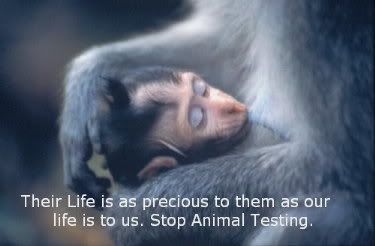
Stop Animal Testing !!!

Photo Sharing and Video Hosting at Photobucket


Did you know that there are hundreds of agencies around the world spending your money shoving dogs into metal chambers and pumping in pesticides while the animals try in vain to escape the deadly poisons?
Or that researchers still swab burning chemicals into rabbits eyes and onto their shaved skin? Animals are routinely cut open, poisoned, and forced to live in barren steel cages for years, although studies show that because of vast physiological variations between species, human reactions to illnesses and drugs are completely different from those of other animals.

Today's non-animal research methods are humane, more accurate, less expensive, and less time-consuming than animal experiments, yet change comes slowly and many researchers are unwilling to switch to superior technological advances. Animal experimentation not only is preventing us from learning more relevant information, it continues to harm and kill animals and people every year. Hundreds of thousands of these animals are poisoned, blinded, and killed every year in outdated product tests for shampoos, household cleaners, cosmetics, hairspray, and other personal care and household items.

Although more than 500 companies have banned all animal tests forever, some corporations still force substances into animals stomachs and drip chemicals into rabbits eyes. These tests are not required by law, and they often produce inaccurate or misleading results even if a product has blinded an animal, it can still be marketed to you. Animals deserve rights, regardless of how they taste or how convenient it is to experiment on them. Like humans, animals are capable of suffering and have an interest in leading their own lives.
These animals do not have a voice to speak out and stop this.
WE DO!!!!!!!!


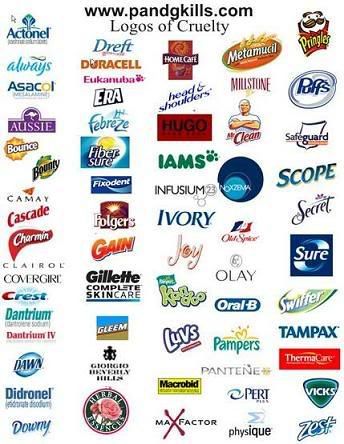
Just because a label on a product says "This finished product was not tested on animals" does not mean they did not test on animals at all. The "finished" part is very sneaky...this means a lot of times that they tested on animals for every step up to the final or "finished" product. Be very careful when it comes to this!


Most of the products listed in the following list,
are physically tested on animals:


Photo Sharing and Video Hosting at Photobucket

...think before you buy something that is going to fund animal testing !!


RELATED VERY IMPORTANT MATERIAL:

- Important Articles

- Very Important Links


More related links:
- SHAC
- European Coalition to End Animal Experiments
- Save Primates
- Animal Testing - Factsheet (Peta)
- Stop Animal Tests

(go to 'Links Archive' for more...)